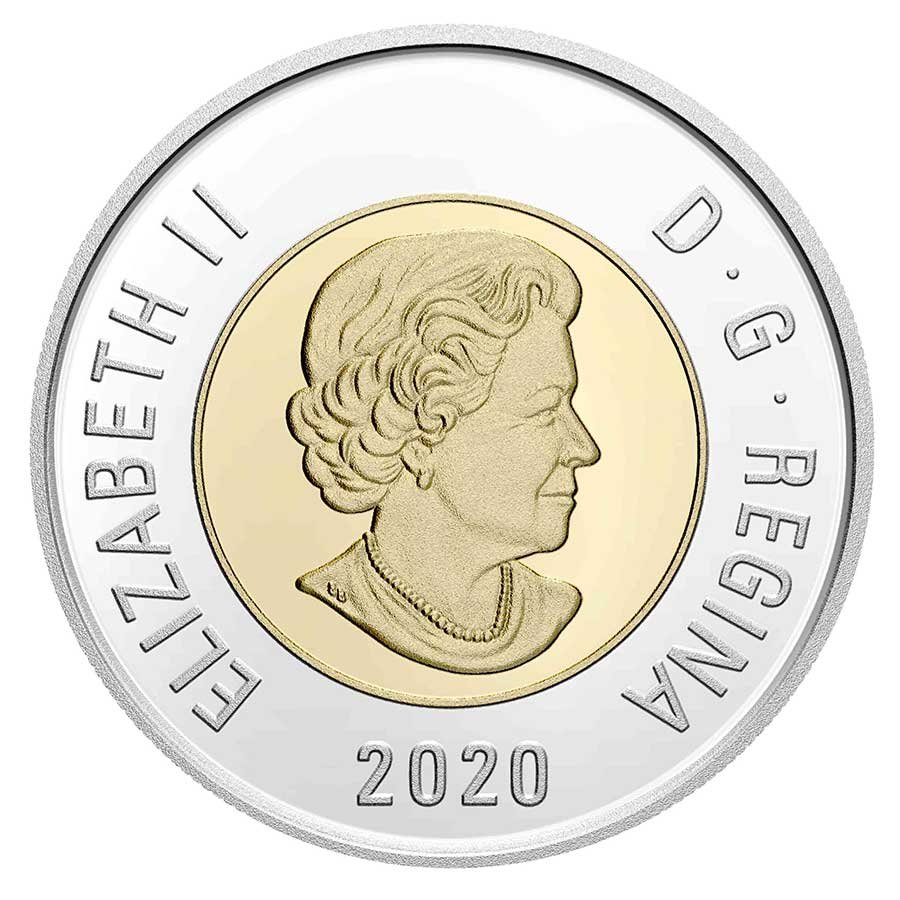
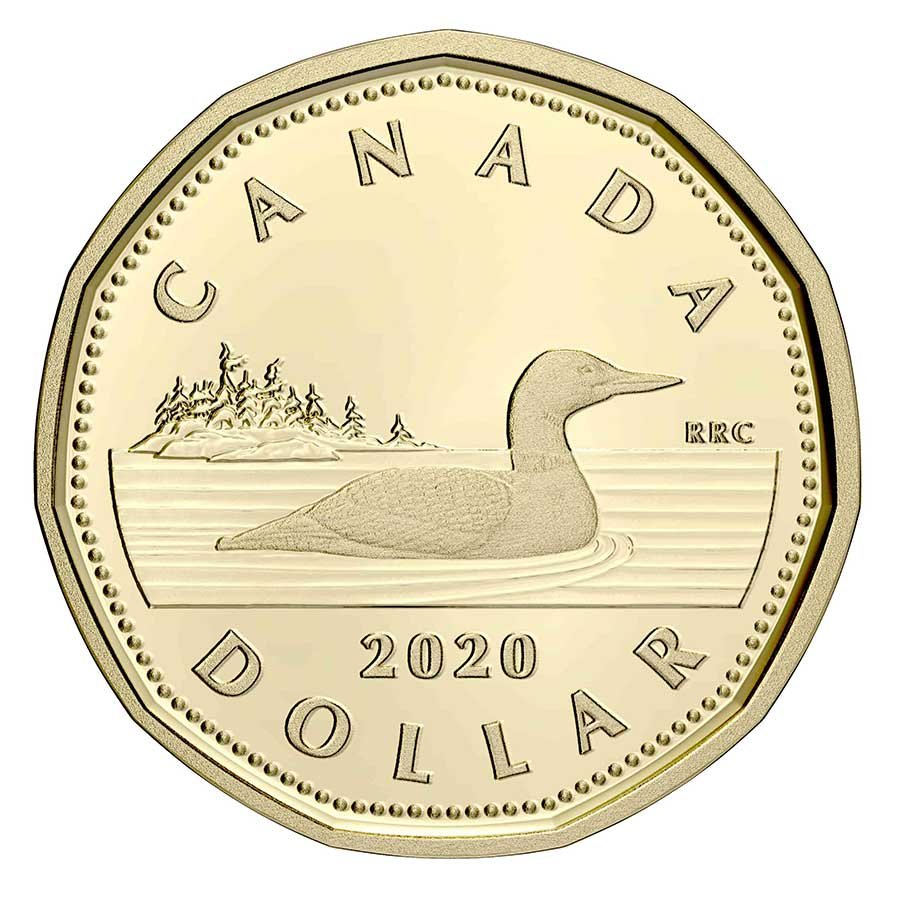
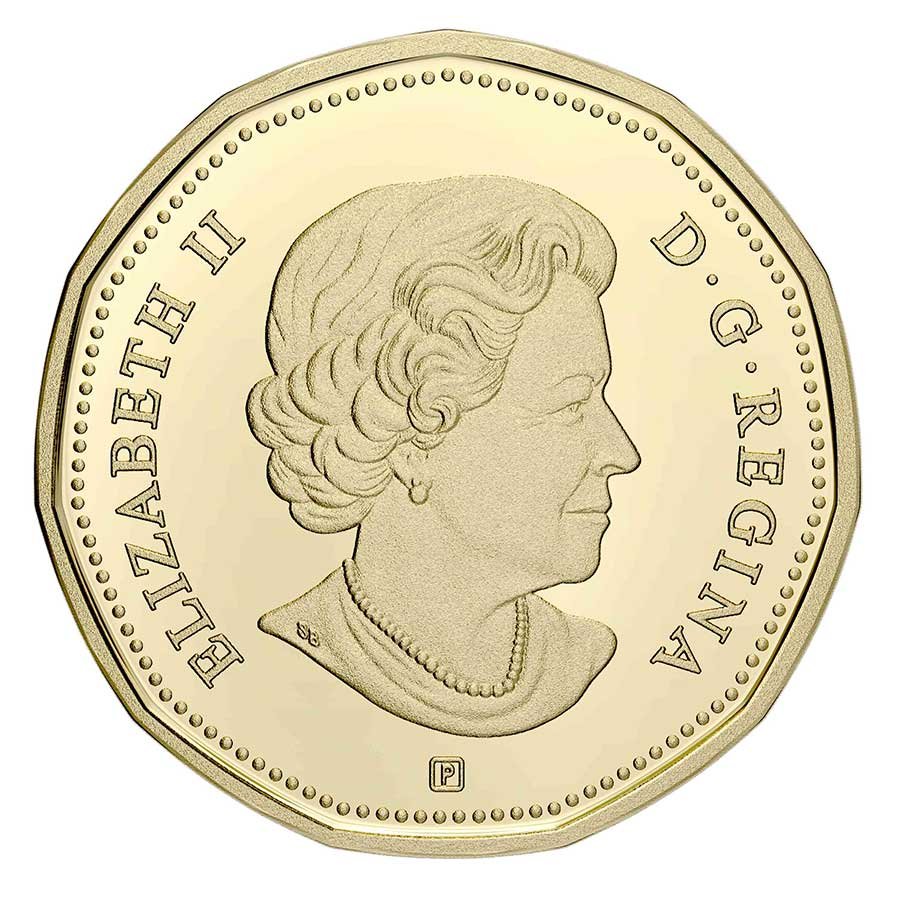
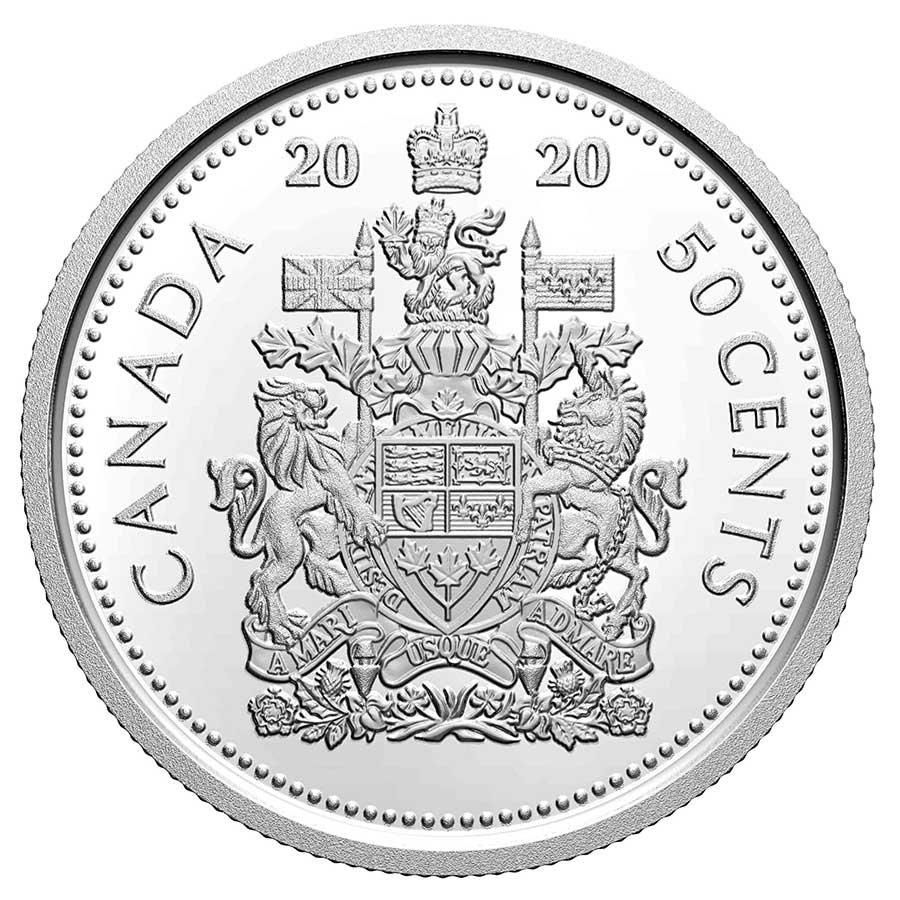
Design:
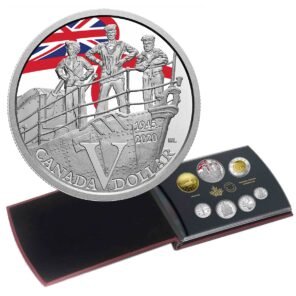
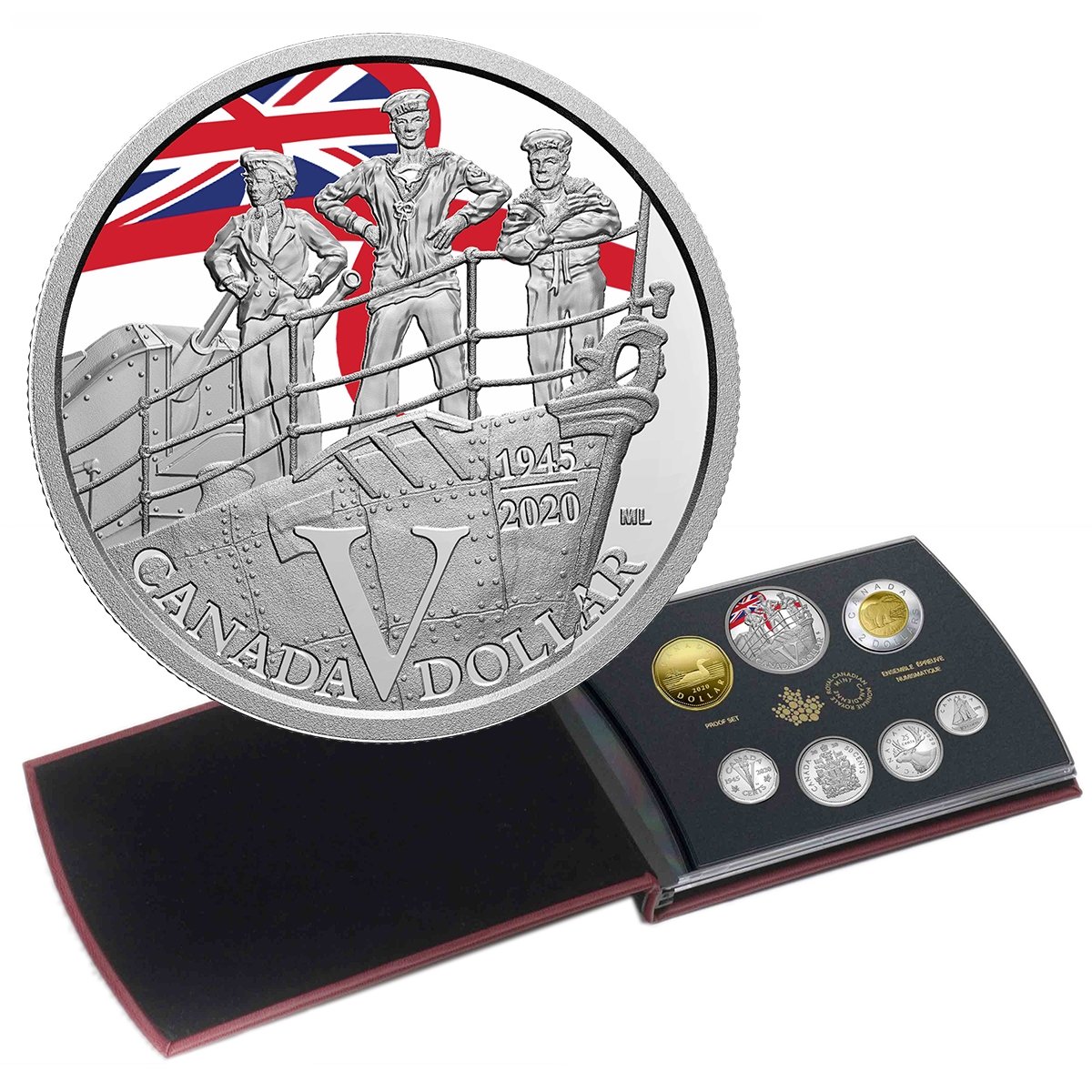
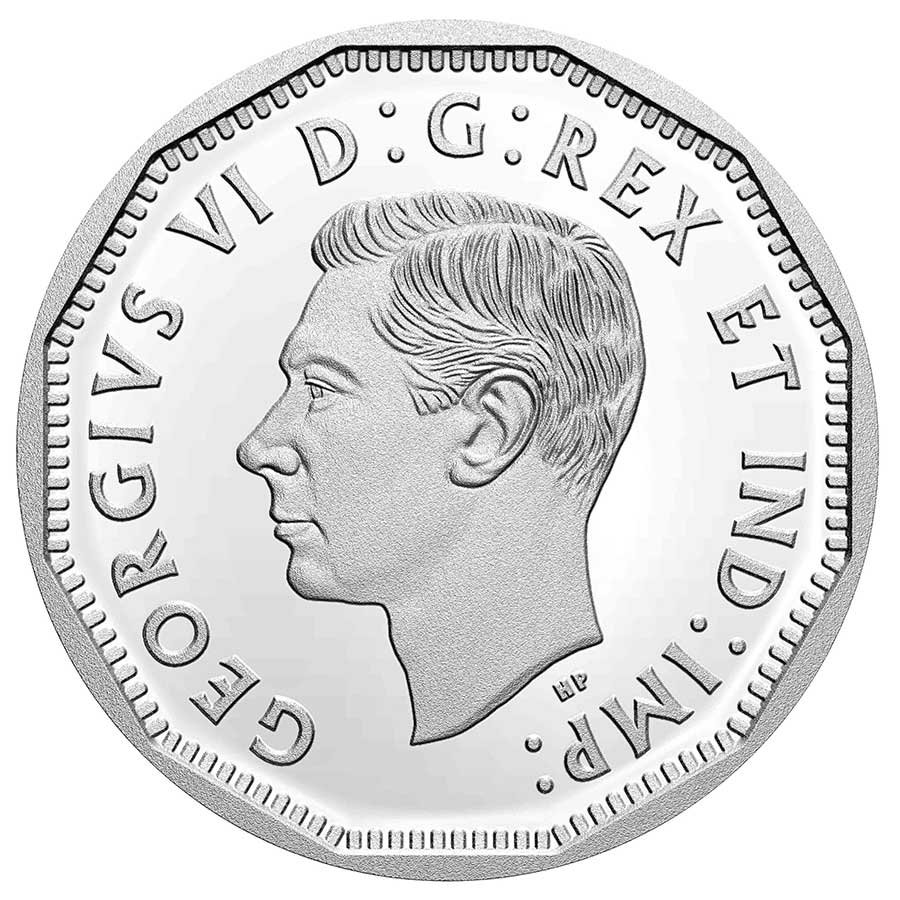
On the 2020 Special Edition Silver Dollar coin, the reverse design by artist Maskull Lasserre is a V-E Day (“V”) salute to the Royal Canadian Navy (RCN). A coloured pre-1965 Naval Ensign provides a stirring backdrop for the engraved depiction of a member of the Women’s Royal Canadian Naval Service (WRCNS) and two members of the Royal Canadian Navy (RCN) standing on the foredeck of a Tribal-class destroyer. The obverse features the effigy of King George VI by T. H. Paget and a Victory privy mark.
“For this design, I drew upon my own experience aboard naval ships as a member of the Canadian Forces Artist Program. The White Naval Ensign symbolizes the common cause and purpose that culminated in V-E Day. I hope its colour and movement will draw the viewer into this moment inhabited by these three members of the Royal Canadian Navy.” Maskull Lasserre: Artist
May 8, 1945: The RCN
The Battle of the Atlantic was the longest continuous battle of the Second World War. And until the battle officially ended on V-E Day, Canada’s navy continued to be a central participant.
The Royal Canadian Navy’s most significant contribution to the Allied victory was through its work as a convoy escort force. In the last two years of the war, all air and surface escorts in the northwest Atlantic were operating under Canadian command (the only theatre of the war that was not under British or American command). And by May 8, 1945, RCN ships and crews had assured the safe passage of more than 25,000 merchant ships and the delivery of 165 million tons of vital supplies to Great Britain.
In 1945, the RCN was one of the world’s largest navies with 434 commissioned vessels. It had proven its capabilities well beyond the transatlantic shipping routes:
In the Mediterranean Sea, RCN ships and crews had taken part in the North African campaign in 1942 and 1943, in the Sicily and Italian campaigns that began in 1943, and in Allied operations in the eastern Mediterranean (Greece) in 1944.
In the Arctic, RCN ships (like the Tribal-class destroyer on the 2020 Special Edition Silver Dollar) escorted convoys on the Murmansk Run, said to be the most dangerous operation due to extreme conditions.
Off the coast of occupied Europe, where Canadian ships had taken part in Operation Neptune (D-Day), the RCN continued to support the army’s seaward flank as it pushed into Northwest Europe in 1944 and 1945. RCN Bangor-class minesweepers also joined in the international effort to clear European waters after V-E Day.
And in the Pacific, where the war continued after Germany’s surrender, HMCS Uganda played a support role in the invasion of Okinawa in May 1945 and served as an anti-aircraft guard until July 1945.
The RCN was able to do it all without battleships and submarines. Canada’s shipyards had supplied the RCN with 224 Canadian-built frigates, minesweepers and corvettes, the unlikely heroes of the anti U-boat war. It had lost 24 warships, but its ships shared in the sinking of 29 enemy submarines. And of the nearly 2,000 members of the RCN who lost their lives at sea during the war, most were killed in the Battle of the Atlantic.
Did you know…
In 1939, Canada’s naval force consisted of less than a dozen ocean-going ships and 3,500 officers and men. By 1945, the Royal Canadian Navy had become one of the largest navies in the world, with 95,000 members and 434 commissioned vessels — including many Canadian-built corvettes and frigates.
The Women’s Royal Canadian Naval Service (WRCNS) was established on July 31, 1942. Nicknamed “Wrens,” its members worked as drivers, signallers, radio operators, plotters, mechanics, cooks, clerks and more. Although regulations did not permit them to serve at sea, about 1,000 WRCNS members served abroad, with more than half of them posted to Newfoundland. (Newfoundland wasn’t part of Canada until 1949 so the future Canadian province was considered an overseas posting.) By 1945, more than 6,000 women had served in Canada’s navy.
Order today.
SPECIFICATIONS
Face Value Composition Weight* Diameter Edge
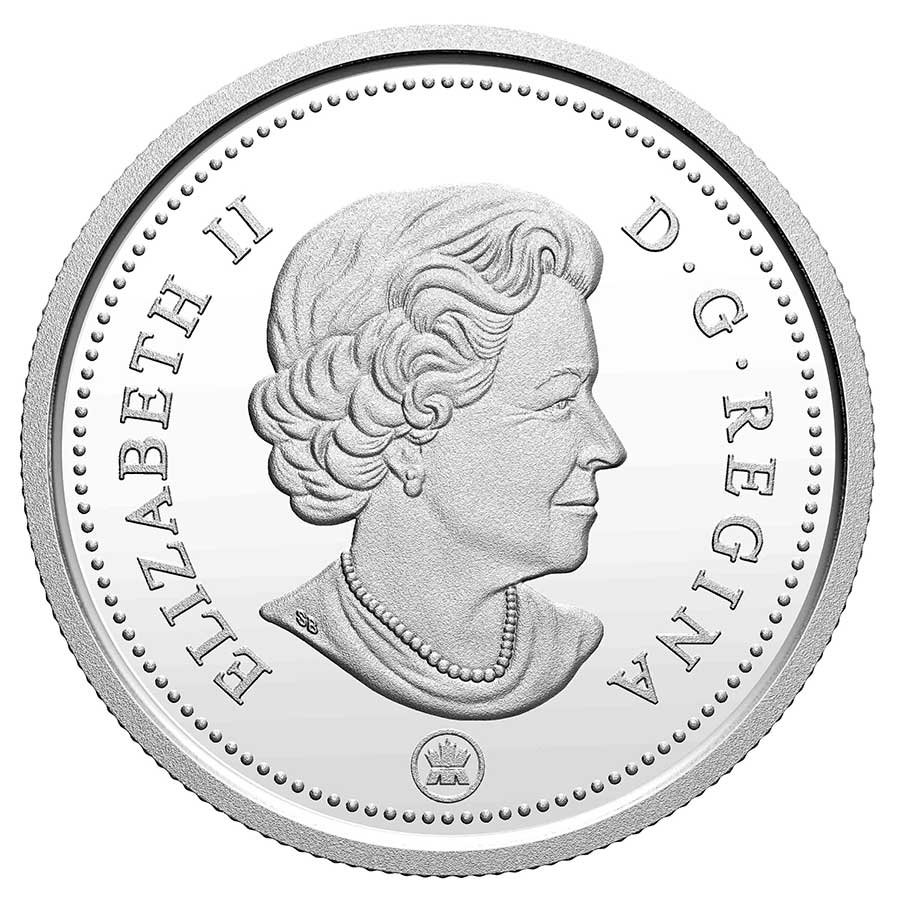
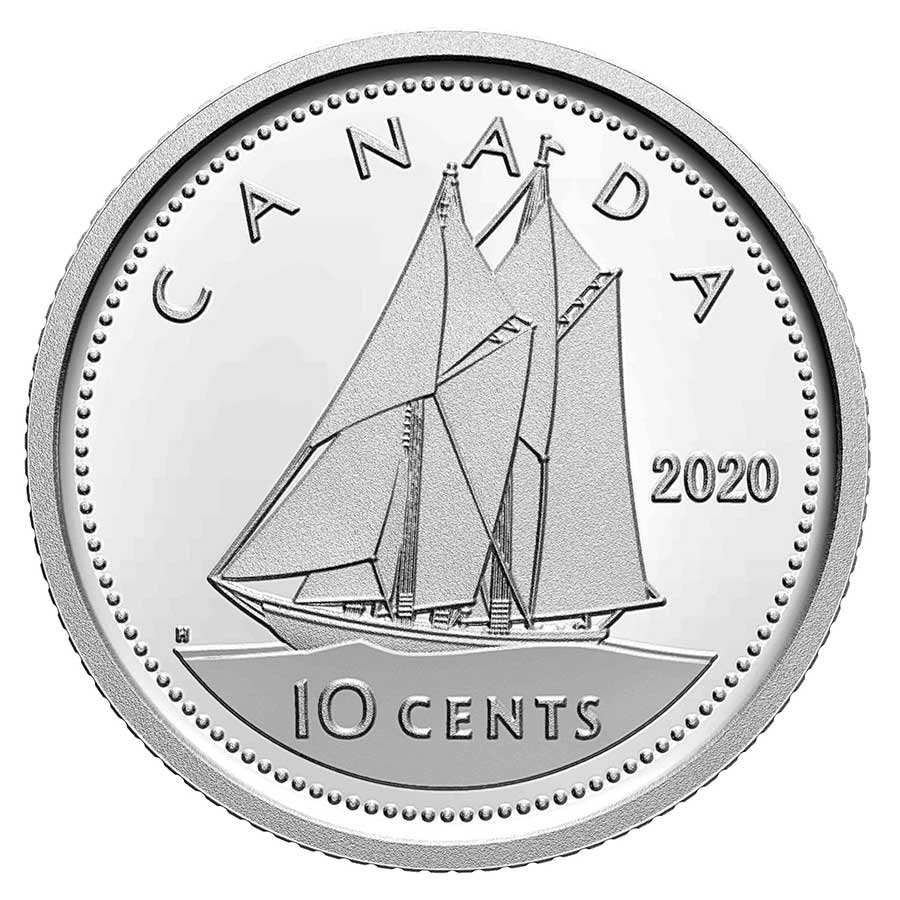
Proof dollar 99.99% pure silver with colour 23.17 g 36.07 mm Reeded
2 dollars Outer ring: Three-ply nickel finish plated steel
Inner Core: Three-ply brass finish plated aluminum bronze
6.99 g 28 mm Interrupted serrations
1 dollar Three-ply brass finish plated steel 6.27 g 26.50 mm
11-sided
Plain
50 cents Three-ply nickel finish plated steel 6.9 g 27.13 mm Reeded
25 cents 4.4 g 23.88 mm
10 cents 1.75 g 18.03 mm
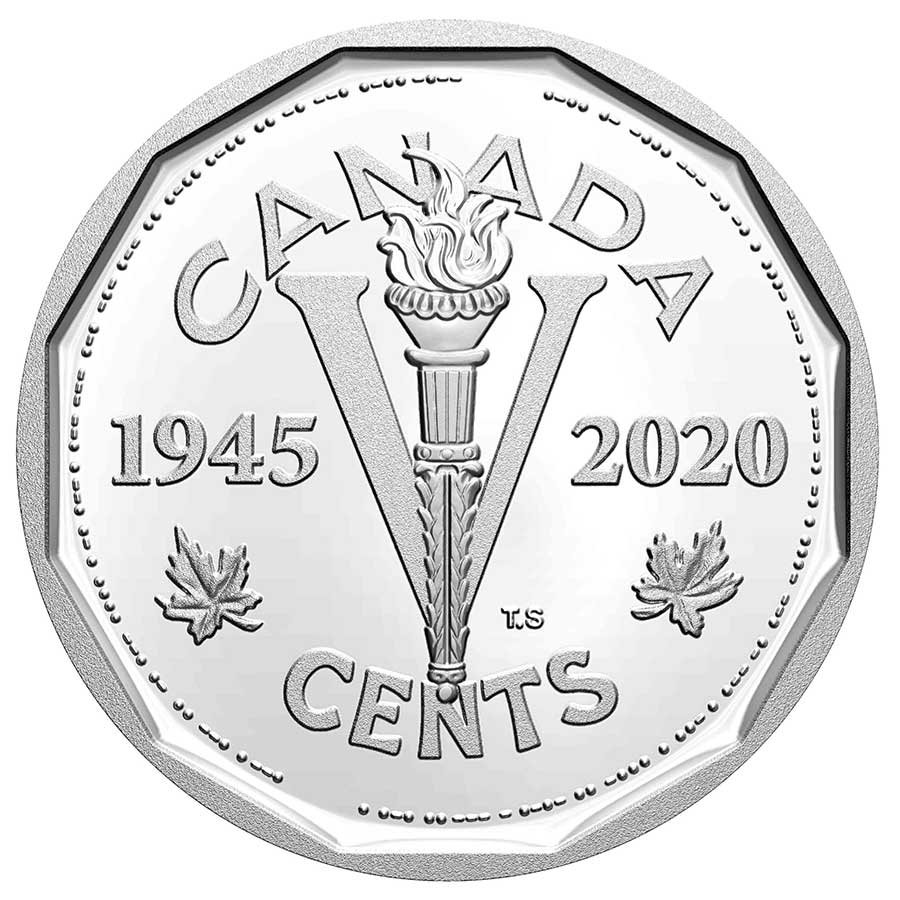
5 cents 3.95 g 21.20 mm Plain
SRP $99.95
Item Number 176211
UPC 6-23932-10041-1
Mintage 20,000
Finish Proof
Artist Proof Dollar: Maskull Lasserre
Packaging Book-style packaging with removable lens and serialized certificate. CD lens concept with maroon outer cover and black beauty box.
Finished size 130.5 mm x 90 mm